
Duration
8 Weeks
Location
Remote
Platform
IOS, Andriod
Screens
20+
Category
Finance
Size
56.4
MB
Project Description
Overview
Ajora is a mobile‑first decentralized savings platform built with Flutter. It digitizes traditional rotating savings circles (commonly known as Ajo, Esusu, or Susu in various cultures), replacing manual, trust‑based administration with smart contract escrow.
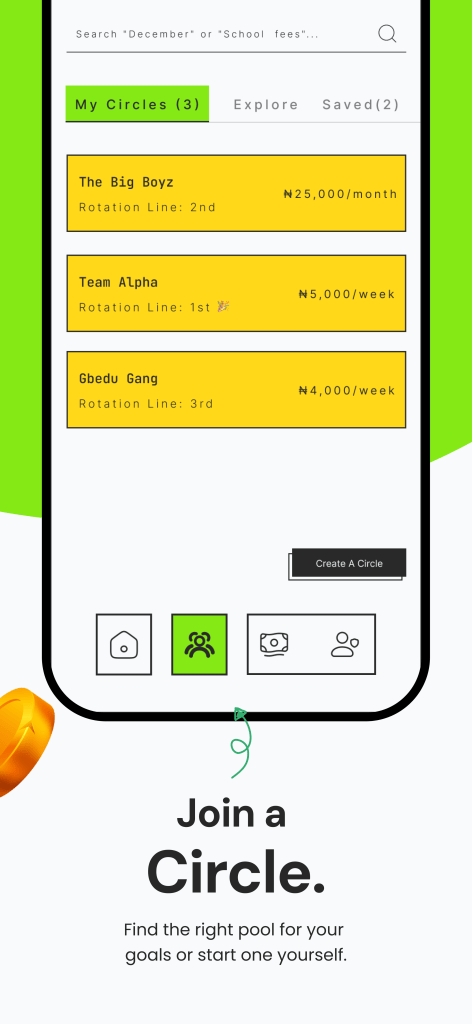
Users form savings pools, contribute weekly or monthly, and receive randomized, automated payouts—with full on‑chain transparency and reputation tracking. The platform combines a Flutter mobile app with a Go microservices backend, delivering a fintech‑grade UX that abstracts Web3 complexity.
Blockchain Agnostic: Designed for deployment on any EVM‑compatible chain or high‑throughput L1. Current implementation uses Polygon for low gas fees and fast finality, with a modular contract layer enabling seamless migration to Ethereum L2s, Sui, or Solana as network needs evolve.
The Problem: Centralized admin control makes traditional Ajo vulnerable to fraud, mismanagement, and opaque record‑keeping. Members can’t track contributions, don’t know their payout order, and have no reputation system to trust strangers.
The Solution: Smart contracts replace the admin—funds are locked, payouts are automated, and the order is randomized and transparent. On‑chain reputation tracks every payment, building trust that scales beyond friends and family.
Role
Flutter Developer
Mobile apps are only as reliable as the architecture driving them.
I design resilent backend stuctures, real-time sync engines, and automatedAI workflows
Highlight
Contribution
Trust‑First UX Strategy
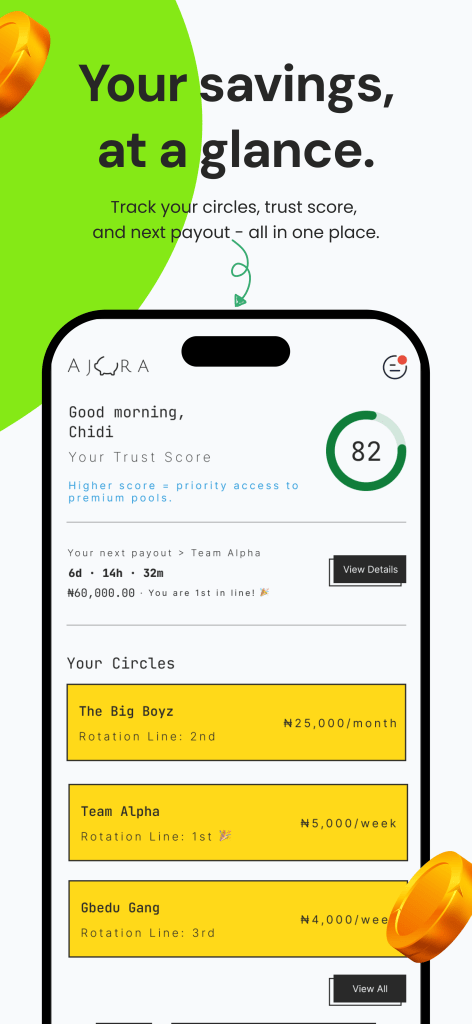
Designed 20+ screens with Trust Score and payout countdown at the center—answering “Where is my money and when do I get paid?”
Design System & Component Library
Built a scalable Figma system with 50+ components, reducing QA cycles by 30%
Web3 UX Abstraction
Designed wallet connect flows, gas fee explanations, and transaction signing states—making blockchain invisible to users
Design–Development Bridge
Served as connective tissue between design, Flutter, and Go teams—eliminating ambiguity
User Research & Validation
Ran remote testing with Nigerian diaspora users—achieving 100% comprehension of randomization mechanic
Mobile Product Strategy
Defined Clean Architecture with Riverpod, owned API contracts with Go backend
Process
Challenges, Outcome & Impact
Challenge
What I did
Impact
01
Building Trust in a Trustless System
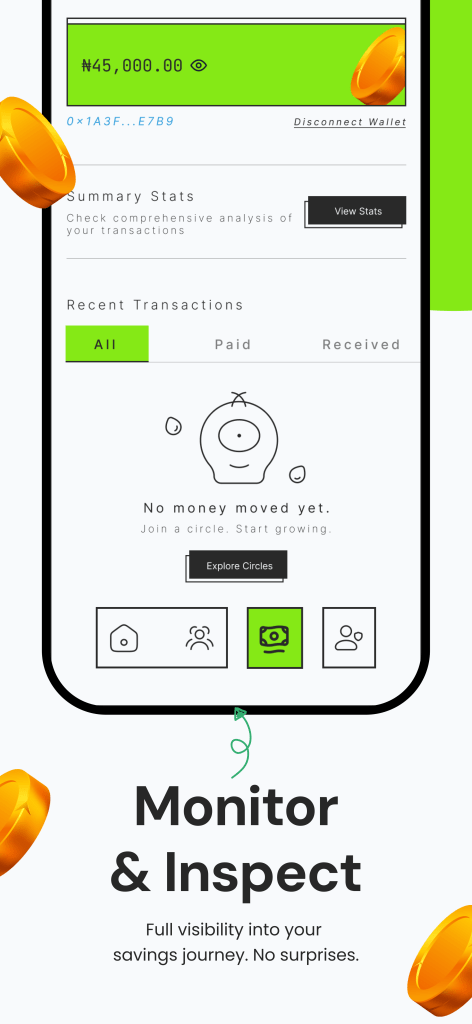
Designed a Trust Score dashboard widget with smart contract visual cues. Put the payout countdown and contribution status front and center—so users always know where their money is and when they get paid.
82% on‑time payment retention—users reported feeling “financially secure” post‑onboarding.
02
Explaining the Randomization Mechanic
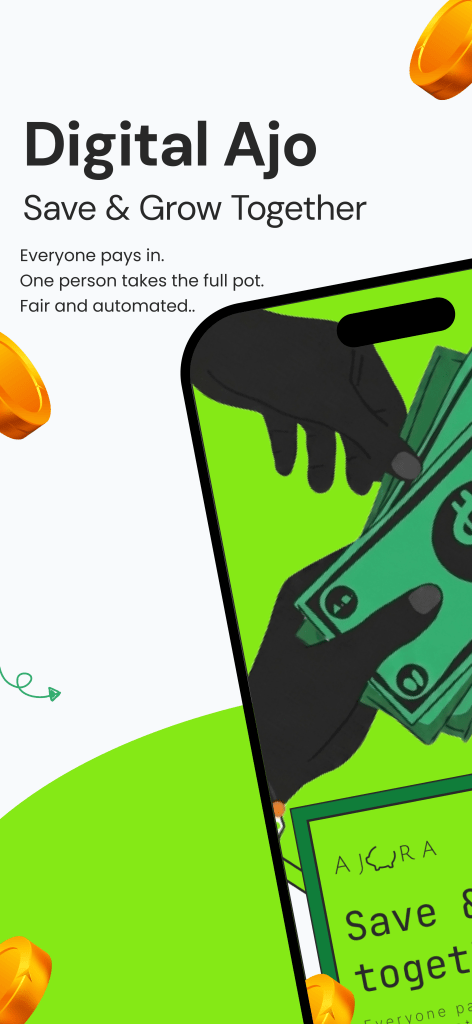
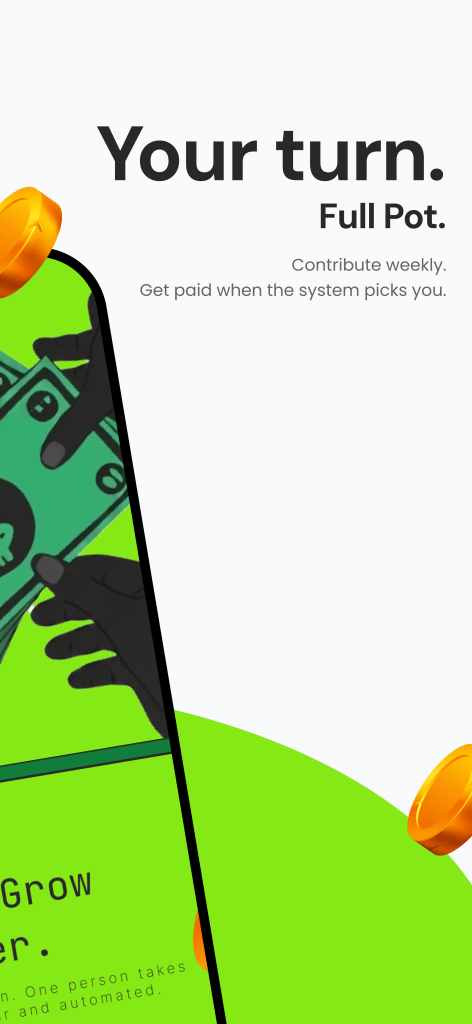
Designed a 3‑step onboarding carousel with a “Shuffle” animation and crisp microcopy: “Everyone pays in. One person takes the full pot. Fair and automated.” Iterated through remote usability testing until the mechanic was instantly clear.
100% user comprehension in testing—onboarding drop‑off reduced by 40%.
03
Making Web3 Invisible to Users
Designed inline gas fee breakdowns with plain‑English explanations (“Network fee, not Ajora”). Created clear “Pending on blockchain” states with estimated confirmation times. Added retry logic for failed payments.
0% drop‑off at the transaction signing stage during pilot—users completed contributions without hesitation.
04
Bridging Design, Mobile & Backend Teams
Wrote detailed PRD annotations directly in Figma—specifying interaction states, error handling, responsive behavior, and API contract expectations. Conducted design QA sprints across Android and iOS.
30% faster frontend implementation—pixel‑perfect delivery with zero design‑dev friction.
05
Building a Reputation System That Scales
Designed the Reputation Hub with Trust Score breakdown (0–100), achievement badges (Consistent Saver, Circle Leader), and KYC status. Made reputation visible and actionable—so users can choose who to save with.
94% pool completion rate (no defaults) —vs. ~65% in traditional systems. Trust now scales beyond friends and family.
Product Quality: 20+ screens designed, 50+ component design system, design‑dev bridge reducing QA cycles by 30%, 82% retention, 94% pool completion, 99.9% uptime guaranteed.